The Common English Usage Problems
For Filipinos, learning the English
language has not been a problem. The usage of English has been used as a medium
of instruction from kindergarten to university. The exposure in the said
language is very strong that speaking in English has become a part of our daily
conversations – formal or informal. However, just like any other native English
speaker, Filipinos still commit mistakes on certain usages and rules in the
English language. Let us discover the common English usage problems we normally
commit.
1. The articles A and An
When we were younger, we
were taught in school that “a” goes for words that start with a consonant
letter while “an” is for the vowels. However, why do we use “a” for “uniform”
and “an” for “umbrella”. This is because the rule should be stated as vowel or
consonant sounds. It should not be
based on the first letter of the word rather the first sound of its syllable.
2. Accept and Except
Accept is a verb which
means to receive while except is a preposition that means to leave out.
Example:
Regina accepted
all the gifts given by Charming except
the new house.
Except
him, everybody accepted the
manager’s apology.
3. Among and Between
Both are prepositions –
among is for three or more while between is for two things.
Example:
Among the
five children, Mary seems to be the most stubborn.
The spatula is placed between the mixing bowl and the measuring cups.
4. Beside and Besides
To say “in addition to,”
we use besides. To mean “close to,” besides is used.
Examples:
Besides my
background in computers, I am a very savvy writer.
Mother rested the plant beside the sofa.
5. Bring and Take
Bring means “to carry from
a distant place to a nearer one” while take means the opposite.
Examples:
Can you bring
those books over here? I want to read them.
Can you take
these books over there? Pile them up nicely.
6. Cannot help but
This is just a nonstandard
expression. To use this in the appropriate way, use “cannot help” plus a
gerund.
Example:
I cannot help but notice the misfortunes our family
has been experiencing.
I cannot help noticing the misfortunes we are
experiencing.
7. Clipped words
Clipped words are those
words which come from a longer word. Example, gym is from gymnasium, and photo
from photograph. Do not use them in formal writing.
Example:
I saw an old photograph of my grandmother in the
closet.
8. Continual and Continuous
Continual means “occurring
again and again in succession.” Continuous means “occurring without
interruption.”
Examples:
His continual
tardiness caused him his suspension.
His continuous
use of the product made his skin fairer.
9. Done
It is the past participle
of the verb do which means it needs
an auxiliary verb or helping verb in a sentence.
Examples:
They have done washing the dishes. It is time to get
some rest.
She has done a very bad thing. She must be punished.
10. Due to the fact that
This has become less
acceptable in writing and speaking. Use since or because instead.
Examples:
Due to the fact that/Because we were late, the teachers scolded us.
The team lost
due to the fact that/since one of
the players missed hitting the ball.
11. Farther and Further
To describe distance, farther is used. Further is used to say “additional.”
Examples:
We need to walk a little farther to reach the
waterfall.
She was promoted as senior manager. Further, she also
got a huge commission.
12. Fewer and Less
Fewer is used for countable nouns while less is for uncountable nouns.
Examples:
We got fewer requests for changes this semester.
The more we deal with the problem, the less trouble
we can get.
13. Hanged and Hung
Hanged is for execution while hung means suspended.
Examples:
In the olden times, witches were either hanged or
burned on a stake.
The lanterns are hung in the living room.
14. In and into
Some may think they mean
the same, but actually, they differ in meaning. Into suggests a movement while in
refers to a position.
Examples:
A rocking chair is in the room.
They saw some men walked into the room.
15. Learn and Teach
Learn means to acquire knowledge while teach means to share what you learned
or impart knowledge.
Examples:
Today, the students learned the rule of inertia.
Teachers teach not only academic subjects but also
moral values.
16. Mad
In formal usage, it means insane while informally, it means angry.
Examples:
She needs to be restrained because she was mad.
(formal)
She was so mad that she threw the book at me.
(informal)
17. Maybe and May be
Maybe is an adverb that means perhaps
while may be is a modal verb plus a
verb.
Example:
Maybe he will send the contract tomorrow morning.
She may be at the party since she is not in her room.
18. Only
To avoid confusion, place only before the word it modifies.
Examples:
She needs only red shirts for the parade.
Only I can ask you personal questions.
19. Precede and Proceed
Precede means “to go before” while the
latter means “to move forward.”
Examples:
The awarding of prizes preceded an intermission
number from the judges.
Please proceed to Window A after the transaction is
done.
20. Than and Then
Than is used to show
comparisons. Then is an adverb that refers to time.
Examples:
I love this couch than the one I sat on before.
Apply the toner first, and then let it stay for about
twenty minutes on your skin.
Common mistakes but avoidable. Be familiar
with the rules and use them appropriately the next time you speak or write an
essay.
List of Useful Vocabulary for the IELTS, TOEFL, and Other English Proficiency Exam
Here are some useful words to add up on your vocabulary bank. Learn them well and get higher score in the English proficiency test you will be taking.


IELTS Review Basic: The Parts of Speech
How can we make a sentence? Basically, a simple sentence is composed of different words that work together to bring out one single thought. This means that every single word in the sentence play a vital role in providing meaning to the sentence. Hence, we call these elements in the sentence the parts of speech.
The parts of speech are words that have specific functions in a sentence. In the English language, we have eight different parts of speech. Let us discuss each part and provide examples for better learning.
1. NOUNS
Nouns are name of people, things, animals, phenomena, and events. It can function differently in the sentence like subject and object. Nouns can be word, phrases or clauses.
Examples:
2. PRONOUNS
These are used to substitute names of nouns in a sentence. We use pronouns to avoid redundancy in the sentence.
Examples:
3. VERBS
Verbs are words that express a movement, occurrence of an event or just a condition. There are action verbs that show an action and state verbs that show a state of a noun.
Examples:
4. ADJECTIVES
Adjectives are words that are used to describe nouns.
Examples:
5. ADVERBS
Adverbs are used to modify verbs, adjectives, adverbs and even the meaning of the whole sentence.
Examples:
The parts of speech are words that have specific functions in a sentence. In the English language, we have eight different parts of speech. Let us discuss each part and provide examples for better learning.
1. NOUNS
Nouns are name of people, things, animals, phenomena, and events. It can function differently in the sentence like subject and object. Nouns can be word, phrases or clauses.
Examples:
- Mary is known to be the prettiest girl in the class.
- I have to go to the hospital and visit my sick aunt.
- What I don’t understand is his insensitivity.
2. PRONOUNS
These are used to substitute names of nouns in a sentence. We use pronouns to avoid redundancy in the sentence.
Examples:
- Raymond is such a hardworking gentleman. He always does his best in everything.
- The dog is waggling its tail. It is a happy dog.
- Everyone in the class has agreed to participate.
3. VERBS
Verbs are words that express a movement, occurrence of an event or just a condition. There are action verbs that show an action and state verbs that show a state of a noun.
Examples:
- She is my friend.
- My aunt eats breakfast every morning.
- I like him so much.
4. ADJECTIVES
Adjectives are words that are used to describe nouns.
Examples:
- I bought a red car for my old friend.
- The flowers are very pretty.
- This dress will look elegant on me.
5. ADVERBS
Adverbs are used to modify verbs, adjectives, adverbs and even the meaning of the whole sentence.
Examples:
- I run fast.
- She is much prettier than her older sister.
- The thief slowly opened the bag.
6. CONJUNCTIONS
These are words that connect grammatically alike words, phrases and clauses. Conjunctions can be coordinating, correlative and subordinating.
Examples:
7. PREPOSITIONS
Prepositions are used to link words in any part of the sentence. Prepositions can be time, place, movement or direction.
Examples:
8. INTERJECTIONS
These are words that are used express an emotion or sentiment.
Examples:
These are words that connect grammatically alike words, phrases and clauses. Conjunctions can be coordinating, correlative and subordinating.
Examples:
- My sister and I enjoy going to the mountains in spring.
- Both Raymond and Jing are working as managers in the hotel.
- Joel was playing the piano while Denver was singing on stage.
7. PREPOSITIONS
Prepositions are used to link words in any part of the sentence. Prepositions can be time, place, movement or direction.
Examples:
- My youngest brother was born on October 20th.
- Their family moved to a new apartment building. They are currently living on the 16th floor.
- We went around town and found a nice cafe down this street.
8. INTERJECTIONS
These are words that are used express an emotion or sentiment.
Examples:
- Wow! I found my lost wallet in my closet.
- Hi! What’s up mother?
- Ouch! You are stepping on my foot!
Filipinism - Words That Must be Avoided to Improve English Proficiency

Have you ever heard of the word “filipinism”?
English proficiency has become an essential requirement in both work and education nowadays. The use of the English language has spread all over the globe as more and more nationalities study English for their careers and studies. In the Philippine setting, English is used almost every day in formal and even informal situations. Thus, it is easy to say that Filipinos are quite accustomed to using the language. However, though Filipinos sound professional once they converse in English, there are some minor problems with their construction and even in some phrases that they use.
Filipinism – these are words or phrases that seem to be correct in usage but they are actually grammatically incorrect and are a result of transliteration. These filipinisms are commonly heard in conversations and even some in writing. This is alarming since they contain grammar errors and should be corrected. Here are some filipinisms and their correct usage:
1. Come again?
This is a common expression Filipinos use to say “could you repeat that?” Instead of saying “come again”, it is better to say “I am sorry I didn’t get that”, “Excuse me?”, “I am sorry, would you please say that again?”
2. It’s for free!
It should be “It’s free!” or “It’s free of charge!”
3. Open the light/computer/TV
Might as well get a screw driver and start “opening” that thing. Instead of the verb “turn on”, use the verb “switch on/ff.”
4. He/She was salvaged.
The word “salvage” means “to save somebody or something.” Filipinos have another meaning of it which means “to kill”. To make this correct, it should be said as, “He/She was assassinated.”
5. Where are you studying?
This question can be answered by simply telling a place where you study – library, bed room, or even coffee shops. But some use this expression to ask about “the school” where one is enrolled. Hence, it should be corrected by saying, “Where do you go to school? or Which school do you go to?”
6. Aircon – air conditioner
7. Fall in line – stand in line
8. For a while – please hold; hold on
9. Ref – refrigerator; fridge
10. Rubber shoes – sneakers; trainers, running shoes
Because of its constant usage within conversations, these filipinisms have started to be acceptable; however, in English proficiency training, this should be greatly avoided. These expressions have to be used in their correct usage to avoid confusion and errors in both speaking and writing English.
Source: http://www.englishforums.com/English/FilipinismPhrase/wkxcw/post.htm
Filipinism – these are words or phrases that seem to be correct in usage but they are actually grammatically incorrect and are a result of transliteration. These filipinisms are commonly heard in conversations and even some in writing. This is alarming since they contain grammar errors and should be corrected. Here are some filipinisms and their correct usage:
1. Come again?
This is a common expression Filipinos use to say “could you repeat that?” Instead of saying “come again”, it is better to say “I am sorry I didn’t get that”, “Excuse me?”, “I am sorry, would you please say that again?”
2. It’s for free!
It should be “It’s free!” or “It’s free of charge!”
3. Open the light/computer/TV
Might as well get a screw driver and start “opening” that thing. Instead of the verb “turn on”, use the verb “switch on/ff.”
4. He/She was salvaged.
The word “salvage” means “to save somebody or something.” Filipinos have another meaning of it which means “to kill”. To make this correct, it should be said as, “He/She was assassinated.”
5. Where are you studying?
This question can be answered by simply telling a place where you study – library, bed room, or even coffee shops. But some use this expression to ask about “the school” where one is enrolled. Hence, it should be corrected by saying, “Where do you go to school? or Which school do you go to?”
6. Aircon – air conditioner
7. Fall in line – stand in line
8. For a while – please hold; hold on
9. Ref – refrigerator; fridge
10. Rubber shoes – sneakers; trainers, running shoes
Because of its constant usage within conversations, these filipinisms have started to be acceptable; however, in English proficiency training, this should be greatly avoided. These expressions have to be used in their correct usage to avoid confusion and errors in both speaking and writing English.
Source: http://www.englishforums.com/English/FilipinismPhrase/wkxcw/post.htm
Tried and Tested IELTS Exam Tips - Listening, Writing, Reading, Speaking from an IELTS Reviewer
Useful Apps for IELTS Teachers
Are you planning to teach a friend who needs help building their skills for the IELTS or the International English Language Testing System examination?
Teaching IELTS can be pretty difficult if you do not have the right materials to use for the class. IELTS mentors have undergone training and classes to hone their English skills and their knowledge for the examination format itself. Additionally, most of them have already taken the test making them authorities in teaching the IELTS. Though they are already professionals in the IELTS, these mentors are also guided by books, manuals, and even apps for the IELTS. Here are some apps these coaches use in their training for the IELTS.
1. IELTS Word Power
http://www.britishcouncil.org/spain/en/ielts-word-power
Teaching IELTS can be pretty difficult if you do not have the right materials to use for the class. IELTS mentors have undergone training and classes to hone their English skills and their knowledge for the examination format itself. Additionally, most of them have already taken the test making them authorities in teaching the IELTS. Though they are already professionals in the IELTS, these mentors are also guided by books, manuals, and even apps for the IELTS. Here are some apps these coaches use in their training for the IELTS.
1. IELTS Word Power
http://www.britishcouncil.org/spain/en/ielts-word-power

Aren’t you surprised why these mentors have the best and the widest vocabulary while teaching? This app helps mentors in knowing and understanding words that are best to be used in the IELTS. Having wide vocabulary is a great advantage for the IELTS examination.
2. IELTS Skills
http://www.appannie.com/apps/ios/app/ielts-skills-free/

With all four sections of the IELTS in a single app, no one can go wrong downloading this app. Practice tests and interactive tasks are conveniently added in this feature. Each skill has explanations that mentors can practice and exercises that comprehensively test their skills for the IELTS.
3. IELTS Speaking Practice
https://play.google.com/store/apps/details?id=com.dmc.iespeaking2&hl=en
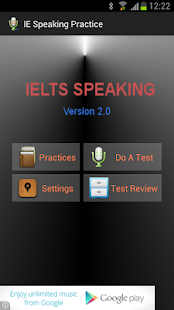
With over 300 questions, coaches are always prepared to conduct speaking tests with their enrolees. The variety of topics makes this app perfect for honing skills and developing better answers for the IELTS speaking examination.
4. Practice English Grammar 2
https://itunes.apple.com/us/app/practice-english-grammar-2/id490759167

Problems with grammar? This app will sort things out with queries on grammar. It has practically discussions and exercises on verb tenses which are a problem to most candidates. Provided with examples and sample tests, this app is one you should have on your smart phones and tablets.
5. Merriam-Webster Dictionary
https://itunes.apple.com/ph/app/id399452287?mt=8

Be more familiar with words and jargons in the reading texts with this handy dictionary. It provides easy to understand definition of words and sample sentences. Moreover, if connected to the internet, one checks the pronunciation of a certain vocabulary word.
These apps are very helpful to teachers teaching the IELTS. However, not only teachers can use this but also the students reviewing for the IELTS. Having them on your smart phones is the best way to review for the IELTS examination especially when you are always on the go.
TOEFL for Filipino Physical Therapists
Several questions have been circling around Filipino physical therapists about applying for work overseas. The opportunities offered to these professionals have been increasing over the years. To meet these demands, Filipino physical therapists comply with the different requirements these agencies need. For starters, Filipino physical therapists prepare by taking the NPTE or the National Physical Therapy Examination.
One step of the process is credentialing. The FCCPT or the Foreign Credentialing Commission on Physical Therapy offers Educational Credentials Review Service. This service is used for licensure to practice physical therapy in the United States of America. People who are seeking to be awarded with a license to work as a physical therapist should apply for this. What this service does is to compare the educational records provided by the applicant to the current requirements for the first professional degree in the US. It will determine whether the education attained is equivalent to that of a graduate of an accredited physical therapy degree program in the Unites States.
Once credentialing has been completed, Filipino physical therapists prepare taking an English competency examination, specifically the Test of English as a Foreign Language (TOEFL). This English proficiency examination is conducted by ETS that aims to provide a certificate of one’s competency in the English language represented by scores. The test is composed of four different sections – the reading, listening, speaking and the writing. The need for the TOEFL score is important as it has been a requirement prior to taking the NPTE.
However, not all states require a TOEFL score before taking the NPTE. What candidates for the NPTE need to do is to verify on the state they are applying whether the TOEFL is needed or not. There could be individuals questioning the important of the TOEFL. Why do they need to take this test?
The TOEFL test is an English proficiency examination that evaluates how well a candidate can use the English language. Through the TOEFL, companies and health care institutions are guaranteed that they have people working for them who can understand the English language. Furthermore, people who would be working overseas, especially in an English-speaking country, need to communicate in English not only at work but also in the environment outside work.
Therefore, the TOEFL examination is important for any individual who is planning to work overseas. For Filipino physical therapists, the need for the TOEFL score depends on the state where they are applying for. All they have to do is to inquire whether they need the TOEFL before taking the NPTE.
One step of the process is credentialing. The FCCPT or the Foreign Credentialing Commission on Physical Therapy offers Educational Credentials Review Service. This service is used for licensure to practice physical therapy in the United States of America. People who are seeking to be awarded with a license to work as a physical therapist should apply for this. What this service does is to compare the educational records provided by the applicant to the current requirements for the first professional degree in the US. It will determine whether the education attained is equivalent to that of a graduate of an accredited physical therapy degree program in the Unites States.
Once credentialing has been completed, Filipino physical therapists prepare taking an English competency examination, specifically the Test of English as a Foreign Language (TOEFL). This English proficiency examination is conducted by ETS that aims to provide a certificate of one’s competency in the English language represented by scores. The test is composed of four different sections – the reading, listening, speaking and the writing. The need for the TOEFL score is important as it has been a requirement prior to taking the NPTE.
However, not all states require a TOEFL score before taking the NPTE. What candidates for the NPTE need to do is to verify on the state they are applying whether the TOEFL is needed or not. There could be individuals questioning the important of the TOEFL. Why do they need to take this test?
The TOEFL test is an English proficiency examination that evaluates how well a candidate can use the English language. Through the TOEFL, companies and health care institutions are guaranteed that they have people working for them who can understand the English language. Furthermore, people who would be working overseas, especially in an English-speaking country, need to communicate in English not only at work but also in the environment outside work.
Therefore, the TOEFL examination is important for any individual who is planning to work overseas. For Filipino physical therapists, the need for the TOEFL score depends on the state where they are applying for. All they have to do is to inquire whether they need the TOEFL before taking the NPTE.
Free Online Resources to Practice TOEFL Speaking Exam
Is it really tough to speak English?
Many Filipinos are good at speaking in the English language. This is due to the reason that English has been incorporated in the medium of instruction in schools in the Philippines. Hence, it is not surprising why Filipinos can communicate in the English language. Though accustomed to using the language, Filipinos still need to take an English competency examination when they need to work or study abroad. This exam will provide evidence that they are proficient in English. The Test of English as a Foreign Language (TOEFL) is one English proficiency examination that is widely taken by Filipinos today.
Many Filipinos are good at speaking in the English language. This is due to the reason that English has been incorporated in the medium of instruction in schools in the Philippines. Hence, it is not surprising why Filipinos can communicate in the English language. Though accustomed to using the language, Filipinos still need to take an English competency examination when they need to work or study abroad. This exam will provide evidence that they are proficient in English. The Test of English as a Foreign Language (TOEFL) is one English proficiency examination that is widely taken by Filipinos today.

The TOEFL has four language skills – reading, listening, writing and speaking. The speaking part of the test is where the candidate’s skills in creating responses to questions and situations. Most of the time, Filipinos enrol in TOEFL review centers as they provide training on how to answer TOEFL speaking exam questions effectively. Additionally, as a candidate for the said examination, you can also try doing practice tests online all by yourself. Here are some online resources you can do for free in preparing for the TOEFL speaking examination.
· English Club http://www.englishclub.com/esl-exams/ets-toefl-practice-speaking.htm
This is a good start for candidates to practice for their speaking. The exercises offered in this site will help the candidate know better the tasks as the transcript and the sample responses are provided. Candidates will get the chance to check their responses if it is right.
· Practice Speaking English Online for the TOEFL Test http://englishteststore.net/index.php?option=com_content&view=article&id=11397&Itemid=170
The exercises found in this site are really helpful. Candidates have the chance to record their responses and save it. You would also hear responses from other people who have answered the same question and leave comments. This is a good way of learning how to effectively answer on some tasks for the TOEFL Speaking exam.
· TOEFL Speaking Network http://www.toeflspeakingnetwork.com/
There is a payment when you want to join this group; however, there are exercises that are available for free where you can practice on. In addition, there are sample responses available to make candidates compare their own responses and check the similarity.
·URCH http://www.urch.com/forums/toefl/146216-toefl-ibt-speaking-rescore-24-26-a.html
If you want to share some questions or information regarding the TOEFL test, this site is where candidates in the TOEFL post comments and recommendations on useful materials for practice in the TOEFL. It is always helpful to find people who share the same feelings with you in the TOEFL.
Gear up as you develop your speaking skills with the best coaches in town. Practice on these sites all by yourself and get more training on the speaking test in TOEFL review centers. You can also refer to this post to avoid common mistakes in the TOEFL speaking exam - common topics are here.
IELTS and TOEFL – Which is More Applicable for Filipino Nurses in the US?
The nursing profession is very popular here in the Philippines. Its popularity is evident as the number of enrolees in nursing schools here in the Philippines has been increasing for the past few years. Many students have been taking the nursing course because of the demand for Filipino nurses in the United States of America.
In planning to work abroad, specifically in the US, it is best for candidates to gain experience here in the Philippines prior to working outside the country. Health institutes and hospitals abroad look for nurses with experience prior to employing them. Aside from the work experience, one requirement that these hospitals and health care institute particularly need is a certification from an English proficiency examination. Nurses can choose between the International English Language Testing System (IELTS) or Test of English as a Foreign Language (TOEFL).
How are these two different?
The TOEFL is a computer-based examination that focuses on academic content. It has four language skills – the reading, listening, speaking and writing. The test runs for about four hours with a ten-minute mandatory break between the first set of exam (reading and listening) and the second set of exam (speaking and writing). The highest score one can get from the TOEFL examination is 120 with a perfect score of 30 in the four language skills.
The IELTS is a paper-based examination that has a broader scope of topics. It also uses the four core skills – speaking, listening, reading and writing. Most of the time, the speaking test is completed a couple of days before the writing exams. The speaking test runs for about ten to fifteen minutes and the writing exams runs for about three hours. The IELTS examination is divided into two types – the Academic and the General Training module. Academic Module is taken by individuals planning to study and work abroad like nurses. General training is often taken by individuals who wish to migrate or study a course less than six months. Scores in the IELTS are in bands from 0 -9.
Which of these tests are more applicable to nurses for US?
Both are recognized English proficiency tests and both provide accurate and comprehensive examinations. For Filipino nurses, the best thing to do is to check the state where they are applying. Some states require the TOEFL; whilst some need the IELTS or even accept both. The safest way is to check the state’s requirements or even ask a consulting firm regarding this issue.

Effective Techniques for IELTS Listening Exam
Are you having problems listening to English conversations? Have you experienced misunderstanding words that you end up confused?
There are some people who really find listening to English conversations a little difficult, most especially if the speakers are using Australian accent or British Accent. American accent is somehow far better to understand than the two accents mentioned earlier. In addition, there are times that individuals feel a little awkward and sometimes even feel nervous when asked to listen to English conversations. Furthermore, if you are an individual taking the International English Language Testing System examination or the IELTS exam, you had better develop and sharpen your listening skill for it is surely to be tested and evaluated in the examination. Having this said, what are some effective techniques for the listening section of the IELTS examination?
• Familiarity with words spoken in Australian or British accent.
In the listening section, you are sometimes asked to fill in the blanks regarding information found in the conversation or audio recording. Certain words are pronounced quiet differently in the accents mentioned compared to American English. Another thing that you have to be familiar with is the words and expressions that are used. For example, the word “apartment” is “flat” in Australian or British vocabulary. Expanding vocabulary in the accents used will bring advantage to you.
• Following instructions carefully.
Let’s say you are good at listening but you always overlook the instructions in each section. Still, you will get a low score on your listening. There are a lot of candidates who are very careless that they skip the instruction as they already feel accustomed to the test type. Always remember that if the instructions asked you to write no more than three words, then you have to write a maximum of three words. If you are asked to circle three answers, then follow it. Failure to do such will cause loss of points to your listening score.
• Stay focused on the audio recording.
Once you are going to answer another item. Skip over it and take note of the key words that you have to find in the audio recording. Once the audio is played, focus. Do not let your mind wander but stay on track with the audio recording. The more you are focused, the easier for you to get the details that you need for the questions.
There are still lots of techniques one can acquire for the listening exam of the IELTS. It is suggested for an individual to enrol in an IELTS review center to take advantage of these skills and be prepared for the real IELTS examination.
The Prepositions: AT, ON, IN
It is a constant reminder to anyone who is taking any English competency examination to have a good background in grammar. Grammar is the basic foundation one must have to be able to speak and write in English. There are eight parts of speech in English namely; nouns, pronouns, verbs, adjectives, adverbs, conjunctions, interjections and the considered one of the most difficult because of its varied rules in grammar – prepositions.
What are prepositions?
Prepositions are words that link a word or a phrase to a part of the sentence. It is entirely different from a conjunction as a conjunction connects two grammatically alike sentences. Meaning to say, conjunctions connect a word to a word, a phrase to a phrase and a clause to another clause.
Prepositions are used in grammar very often. Hence, it is important for us to know the rules on the basic and most commonly used prepositions – in, on, and at.
Prepositions In, On, At as Time prepositions
"in" can be used with the following:
• parts of the day
I was here in the morning.
I have set a meeting with Mr. Bo in the evening.
In the afternoon, the children take a nap in the living room.
• months, years, seasons
The Kims are going back to Korea in December.
In 1985, my younger brother was born.
My parents usually hire a cabin in the woods in spring.
In 1985, my younger brother was born.
My parents usually hire a cabin in the woods in spring.
"on" can be used with:
• days and dates
The president is said to have a meeting with his cabinet members on Tuesday.
Philippines got its independence from the Spaniards on June 12.
Philippines got its independence from the Spaniards on June 12.
• special days
On Christmas, we always go to the ski resort.
There is a big feast in my aunts on Independence Day.
"at" can be used with:
• specific time of the day
I usually get up at 8 o’clock in the morning. How about you?
Class starts at 7.20 am.
Class starts at 7.20 am.
• the following expressions: at night, at midnight, at noon, at sunrise, at sunset, at the moment
I can hear wolves howling at night by the cliff.
Do you eat lunch at noon?
Do you eat lunch at noon?
Prepositions In, On, At as Place prepositions
The preposition in is used to describe an object or a person within the area of something or within the confines of something.
Examples:
The children are busily doing an experiment in the laboratory.
Davao City is in Mindanao.
What is in your bag?
The preposition on is used to describe that something is on or against another surface of something.
Examples:
The books that I bought are placed on the table.
The cat is sleeping on the sofa.
A huge wall clock is placed on the wall.
Finally, the preposition at is used when writing a complete address.
Examples:
I live at 34 St. Coral Avenue, Toril, Davao City.
Her favorite flower shop is at 1423 Main Street.
Examples:
I live at 34 St. Coral Avenue, Toril, Davao City.
Her favorite flower shop is at 1423 Main Street.
In addition, you can also use at to show a specific point or location.
Examples:
Examples:
Rhea is working at her desk.
I work at a bank.
I saw her standing at the entrance of the building.
Being familiar with the basic usage of these prepositions is essential in writing and in speaking. Practice more on these and remember the rules very well.
Common IELTS Speaking Topics for General Training Module
Do you feel apprehensive when you are asked to speak in front of someone? Have you experienced having a conversation to a native English speaker? Well, you will have to experience both when you are about to take the IELTS Speaking test.
The International English Language Testing System (IELTS) examination has been very popular among individuals who are preparing their requirements in working, studying or migrating overseas. Certain countries have made the IELTS as one of their requirements to ensure the competency of an individual in terms of being competitive and ability to communicate in an English-speaking country.
It is known to any IELTS candidate that there are two kinds of IELTS test depending on the purpose of the examinee – the Academic and the General Training. Because speaking in English is very important to communicate, the speaking examination assesses the individual’s capability to handle conversations and situations in the English languages. In the General Training assessment, here are some common topics interviewers ask the examinees.
For Task 1, the examiner can ask questions about your family, work, education, and hometown.
• Describe your family. Do you have a large or small family?
• What do you do at work? What are your certain responsibilities? Describe the company or the organization you are working for.
• What was your course in the university? What is the education system like in your country?
• What are the industries to be found in your hometown? Is there any advantage or disadvantage living in your hometown?
For the second task, you might be given questions regarding people, events, and places.
• Describe a childhood memory you have.
1. When did it happen?
2. Who was with you?
3. How did you feel that time.
Explain why you remember this particular memory.
• Describe a lake, a river or a sea you have visited.
1. Where is the lake?
2. How often you have visited it?
3. What activities do you do there?
Explain why you like this particular place.
For the third task, questions are connected with the topic in the second task.
• What types of leisure activities are popular in your country?
• Why it is important for people to have time for leisure activities?
• Do you think state or private television is better?
• What effects can watching television have on children?
If you are not that confident with your speaking skills, then it is best to enrol in an IELTS training center. They will help you learn more strategies that will make your speaking skills the best for the IELTS examination.
IELTS Review Strategies - Uncomplicated and Effective Way on How to Increase Your Performance in the IELTS
How many times have you taken the International English Language Testing System (IELTS)?
This is one issue most examinees are apprehensive to respond to most significantly to people who have taken the IELTS more than once. Individuals for the IELTS have these target scores set by the companies or schools that they are obtaining. Hence, getting the target report in one take is what most individuals would like.
For Filipinos, the IELTS certification is essential as it accomplishes their requirement for their career applications or college applications. In connection with this, here are several simple and efficient ways you can pay attention to to boost your performance in the IELTS assessment.
1. Minor problems may affect your report.
Make sure your spelling and even how you pronounce key phrases. Minor problems that seem not that important could cause a deduction from your score. Meaning to say, it is advisable to modify your work and be watchful and delicate with the way you speak.
This is one issue most examinees are apprehensive to respond to most significantly to people who have taken the IELTS more than once. Individuals for the IELTS have these target scores set by the companies or schools that they are obtaining. Hence, getting the target report in one take is what most individuals would like.
For Filipinos, the IELTS certification is essential as it accomplishes their requirement for their career applications or college applications. In connection with this, here are several simple and efficient ways you can pay attention to to boost your performance in the IELTS assessment.
1. Minor problems may affect your report.
Make sure your spelling and even how you pronounce key phrases. Minor problems that seem not that important could cause a deduction from your score. Meaning to say, it is advisable to modify your work and be watchful and delicate with the way you speak.
2. Read directions meticulously.
Oftentimes, we tend to ignore the instruction as we see the exam style. However, in the IELTS exam, you have to know very well what the guidelines as you to do. Instructions from various exam kinds vary and understanding it sensibly is important.
3. Develop answers as much as possible.
This is essential in speaking and writing. Remember to have an entertaining talk with the examiner by giving more details to your response. Cause him to be or her feel that you are excited about the conversation. In writing, increase your notions by writing additional information and good examples in your reply.
4. Read as extensively as you can.
One of the best things to do in reviewing for the IELTS is developing good vocabulary. Your excellent command in the vocabulary is not only constrained in its advantage in the reading area but to all parts at the same time. You can convey yourself better in speaking and writing when you can think of the right words to state it.
Oftentimes, we tend to ignore the instruction as we see the exam style. However, in the IELTS exam, you have to know very well what the guidelines as you to do. Instructions from various exam kinds vary and understanding it sensibly is important.
3. Develop answers as much as possible.
This is essential in speaking and writing. Remember to have an entertaining talk with the examiner by giving more details to your response. Cause him to be or her feel that you are excited about the conversation. In writing, increase your notions by writing additional information and good examples in your reply.
4. Read as extensively as you can.
One of the best things to do in reviewing for the IELTS is developing good vocabulary. Your excellent command in the vocabulary is not only constrained in its advantage in the reading area but to all parts at the same time. You can convey yourself better in speaking and writing when you can think of the right words to state it.
5. Leave a question and start working on another.
Occasionally, you will be confronted with hard questions most importantly in the reading portion of the IELTS. It is recommended that you go forward to the next question rather spend most of your time considering on the right answer to a selected question. Skip a question and do not forget to return to this query before you submit your answer sheet.
For a more complete practice and training for the IELTS, why don’t you register for an IELTS course? IELTS review centers provide the best instruction from top-caliber teachers who provide the most useful procedures and strategies to boost your performance in the IELTS test.
Occasionally, you will be confronted with hard questions most importantly in the reading portion of the IELTS. It is recommended that you go forward to the next question rather spend most of your time considering on the right answer to a selected question. Skip a question and do not forget to return to this query before you submit your answer sheet.
For a more complete practice and training for the IELTS, why don’t you register for an IELTS course? IELTS review centers provide the best instruction from top-caliber teachers who provide the most useful procedures and strategies to boost your performance in the IELTS test.
IELTS Speaking Practice - Effective Tips on How to Ace the IELTS Speaking Tasks
Speaking in front of a native speaker for the IELTS (International English Language Testing System) test is not a piece of cake. There are different thoughts running around your head while facing the interviewer. Am I being judged on how I look? Will I be able to answer the questions appropriately? Will I have to confidence to build constant eye contact with the interviewer? With all these thoughts clouding your mind, chances are you are going to mess up your interview. The best way to do before and while having the speaking examination is to stay calm. Aside from that, here are some simple yet effective ways on how you can ace the IELTS speaking test.
• Be familiar with how you are going to be assessed
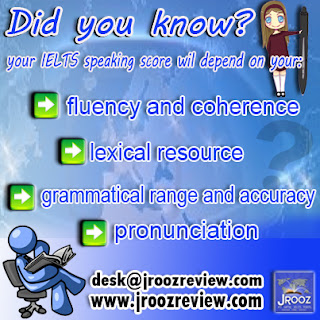
Examiners have criteria in rating your responses. Some of these are fluency, cohesion, grammar, pronunciation, and accuracy. If a candidate knows well about these criteria, then he or she can formulate responses that will address all of the mentioned above. As a result, the response is straightforward and appropriate for every question asked.
• Give intelligent responses
What do we mean by intelligent? When asked a question, answer in complete sentences. Give full responses to questions. Longer responses give emphasis that you are conversant and at the same time full of ideas. Moreover, elaborate your answers by describing and providing more details most especially on the first task.
• Use your experiences in your answer
Based on experience, people speak more when they relate their answers to their experiences and or to their prior knowledge. Sometimes these experiences are not even real. People make up stories to support their answers. Having this makes the talk more interesting having the examinee hooked on your responses.
• Have a conversations English
Practice speaking in English at work or even at home. Find a partner whom you can speak English comfortably. Be open to criticisms when it comes to your pronunciation and choice of words. Learning is best when you are corrected and you are prepared enough for feedbacks and suggestions.

• Be exposed with the media – TV and print in English
The more you read or listen to people speaking in English, the better your understanding and fluency with the language. Observe how people speak. Imitate them but do not overdo it. Try to be natural and practice in front of a mirror. Be confident.
In IELTS review centers, coaches have one-on-one mock assessments in speaking candidates can take advantage. Having this makes the candidate prepared and ready to face a native English speaker on the IELTS exam day.
Three Effective IELTS Preparation Tips for Butchers
Butchery is one profession which is in high demand in other countries, most specifically Australia. In the past few years, the Australian government has opened a door of opportunity to Filipino butchers in their companies and institutions. Due to this demand, Filipino skilled workers start to find training to better hone their skills in their field of expertise. However, before Filipino skilled workers are accepted for this training in butchery, they need to take the IELTS examination (International English Language Testing System) first. As a preparation for this English competency examination, Filipino skilled workers need to know some helpful and effective tips as they plan to take their examination for the IELTS.
There are a lot of ways on how to prepare for the IELTS examination. Some may have been useful while some may not have been that efficient. Here are three proven effective tips butchers can try doing as they prepare for the IELTS examination.
1. Read materials in English
There are a lot of ways on how to prepare for the IELTS examination. Some may have been useful while some may not have been that efficient. Here are three proven effective tips butchers can try doing as they prepare for the IELTS examination.
1. Read materials in English
Reading increases one’s vocabulary. In the reading examination of the IELTS, butchers might encounter some words that they may find strange or new to them. Through reading different materials written in the English language, they will come across different words which can be useful to them for the test. They can have these words written in a notebook and have a simple definition for these. In addition, butchers will be familiarized with different sentence structures that are also present in the passages in the reading section of the IELTS. The more materials these butchers read, the more they become familiar and comfortable with the usage of the English language.
2. Watch English movies
Watching movies in English not only entertains an individual but provides learning as well. There are different expressions in words and phrases in the English language used in movies and TV dramas. Being accustomed to these helps examinees for the listening section of the IELTS. Furthermore, it is a good practice for examinees to observe how conversations are carried out in English as conversations are part of the tasks in the listening section. Listen to how common words are pronounced and imitate them slowly as one gains expertise in speaking. The more exposure an individual gets in English, the higher learning he or she gets.
3. Enroll in an IELTS review center
Getting a score of 5 in the General Training of the IELTS is crucial; hence, butchers need to be sure to get attain this. Getting into IELTS review classes are very beneficial as mentors follow an effective program. They follow schedules on training and mock tests to have their trainees experience what the real IELTS test feels like.
The need to get the set score for IELTS is important for butchers. Once they get this score, they become qualified for higher level of training for improving their skills in butchery.


